
Before You Buy
The Real Numbers
How Much Does It Really Cost to Get Utilities on Vacant Land?
Getting utilities to raw land can cost anywhere from $500 to over $50,000. Use this calculator to estimate what you'll actually spend before you commit to a purchase.

How Much Does It Really Cost to Get Utilities on Vacant Land?
You found the perfect piece of land. The price fits your budget, the views are exactly what you pictured, and you can already imagine your future home right there. Then reality hits. How much will it actually cost to get power, water, and sewer to the property?
The cost of utilities on vacant land ranges from $10,000 to $50,000 or more, depending on three big factors: how far the property sits from existing infrastructure, what type of land you bought, and which state you are in. According to the National Association of Home Builders (NAHB), utility infrastructure makes up roughly 10-12% of a finished lot's total development cost, and that percentage climbs fast on remote parcels. Understanding these costs before you buy is the single most important budgeting step for anyone purchasing raw land.
This guide breaks down the real numbers for each utility type. You will get specific cost ranges, state-by-state data for well drilling, and a clear comparison of grid-connected versus off-grid options. By the end, you will know exactly what to budget before you close on a property.
What Goes Into the Cost of Getting Utilities to Raw Land?
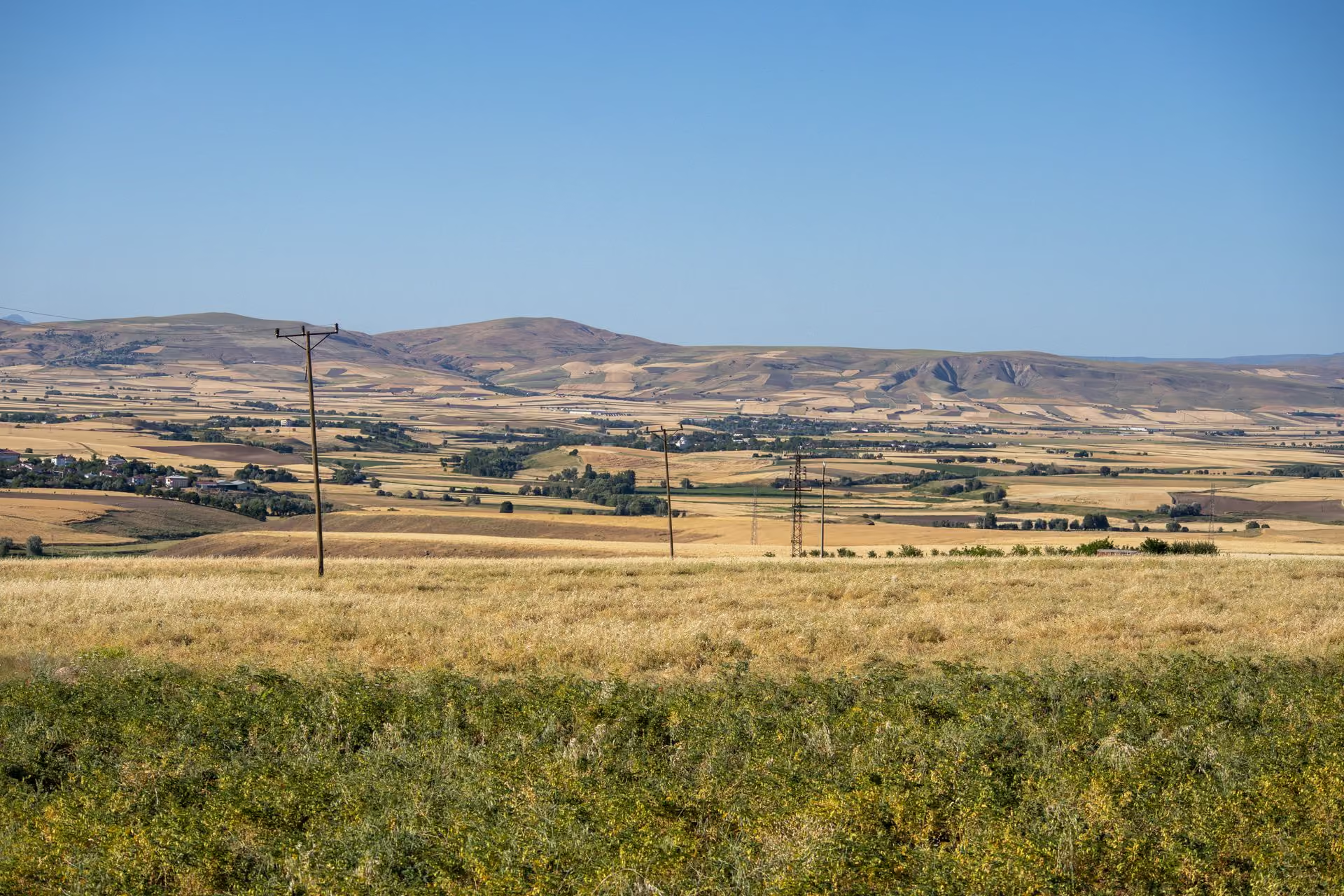
Before we get into specific numbers, it helps to understand what drives these costs. The biggest factor is distance. Every utility company charges by the linear foot to run lines from their existing infrastructure to your property. A lot that sits 200 feet from a power line will cost a fraction of what a lot half a mile away will cost.
Here are the main utilities you will need to consider when [getting utilities to raw land](https://www.compasslandusa.com/how-to-check-for-utilities-on-land-for-free/):
Electricity (grid connection or solar).
Water (municipal hookup or private well).
Sewer/septic (municipal sewer or septic system).
Internet (cable, fiber, satellite, or cellular).
Each one has its own cost structure, timeline, and set of surprises.
"We have sold over 800 properties since 2017 across Arizona, Colorado, Florida, Nevada, and New Mexico. The number one thing that catches buyers off guard is utility costs. The land itself might be $8,000, but getting power and water to it could double your total investment. That is why we always tell people to research utility costs before they sign anything."
— Andrew, Co-founder of Compass Land USA
The terrain matters too. Rocky soil in Arizona costs more to trench than sandy soil in Florida. Mountainous lots in Colorado may need special engineering for water and sewer lines. Always factor in your specific property conditions, not just national averages.
[IMAGE: Infographic showing the four main utility types with average cost ranges | Alt: utility hookup cost land - breakdown of four main utility types and their cost ranges]
How Much Does It Cost to Run Electricity to Vacant Land?
Electricity is usually the first utility buyers think about, and it is often the most expensive to install on raw land.
**Grid connection costs:** $10,000 to $30,000 on average. Some properties near existing lines can connect for as little as $2,500. Remote parcels can run $50,000 or more.
The main cost driver is the per-foot charge to run power lines. Most utility companies charge between $5 and $25 per linear foot for overhead lines. Underground lines cost significantly more.
Here is how that math works in real life. If your property sits 500 feet from the nearest power line and the utility charges $15 per foot, that is $7,500 just for the line extension. Add in the transformer, meter installation, and permits, and you are looking at $10,000 to $15,000 total.
According to Felicia, who manages due diligence on all Compass Land USA acquisitions, "Most power companies will cover the first 100 to 200 feet of line extension for free. After that, every foot is on you. We always tell buyers to call the local utility company before making an offer. They will give you a free estimate over the phone."
**What affects your electric hookup cost:**
- Distance from nearest power line (the biggest factor)
- Overhead versus underground installation
- Local utility company policies and rates
- Permit fees (vary by county)
- Whether a new transformer is needed
If the electric hookup cost for your vacant land seems too high, off-grid solar might be a better option. We cover those numbers in a later section.
What Does It Cost to Drill a Well on Rural Land?
If your property does not have access to municipal water, you will need a private well. Well drilling is one of the most variable costs in raw land development because it depends heavily on your geology and how deep the water table sits.
**National average:** $5,000 to $15,000 for a completed residential well.
But averages can be misleading. Well drilling costs vary dramatically by state. The five states where Compass Land USA operates show just how wide that range can be.
*Source: HomeGuide well drilling cost data, 2026*
A few important things to know. In desert states like Arizona and Nevada, well success rates can drop to 30-40% because of rocky soil and deep water tables. That means you might pay for a well that comes up dry. Always ask the driller about success rates in your specific area before committing.
You can check your property well depth for free before you buy. This gives you a solid estimate of how deep the driller will need to go, which directly affects your total cost.
"In Arizona, well drilling is one of the biggest wildcards. We had a property in Apache County where the nearest neighbor's well was 400 feet deep. The buyer's well came in at 280 feet. Same neighborhood, completely different geology. Always check multiple neighboring wells before you budget." — Andrew, Co-founder of Compass Land USA
**Municipal water hookup** is the cheaper alternative when available. Connection fees typically run $1,000 to $6,000, plus tap fees of $200 to $500. Some high-demand areas charge impact fees up to $12,000. Call your local water authority for an exact quote.
How Much Does a Septic System Cost on Vacant Land?
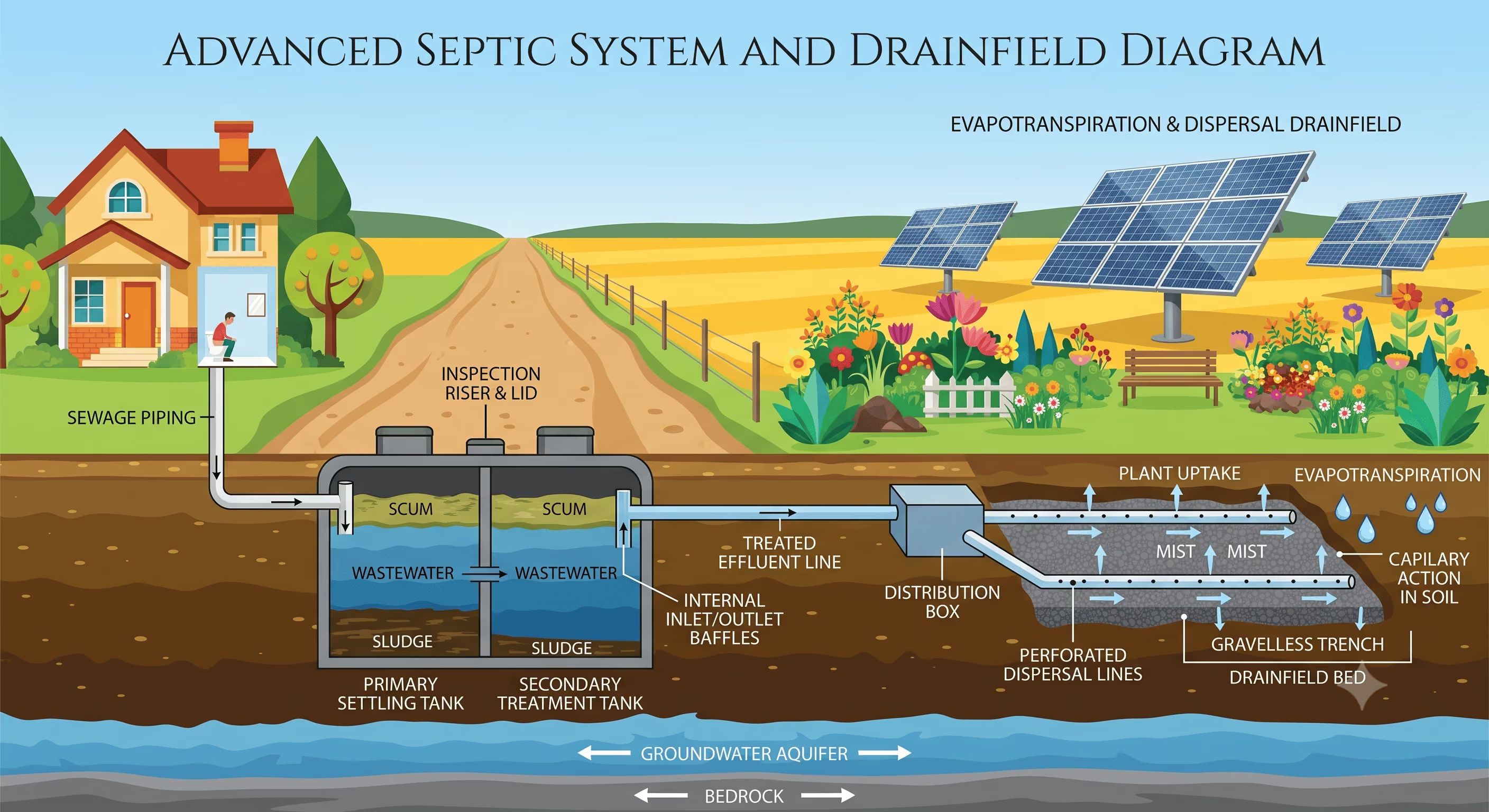
If municipal sewer is not available (and it usually is not on rural vacant land), you will need a septic system.
**Conventional septic system:** $3,500 to $8,500. The national average sits around $8,000 according to HomeGuide 2026 data.
**Alternative septic systems** cost significantly more:
Before any septic installation, you will need a percolation (perc) test. This test measures how fast water drains through your soil and determines which type of system is allowed. A perc test costs $700 to $2,000 depending on your county.
According to Andrew, co-founder of Compass Land USA, the perc test is something you should do before closing if possible. "If the land fails a perc test, you might be limited to an expensive alternative system or, in rare cases, unable to install septic at all. We always recommend making your purchase contingent on a passing perc test."
You can also check the zoning of your property to find out what septic systems the county allows before you start getting quotes.
Is It Cheaper to Go Off-Grid or Connect to the Grid?
This is one of the most common questions we hear from land buyers, and the answer depends on your property and your lifestyle.
Felicia, who has managed due diligence on hundreds of land transactions, points out that "off-grid is not always cheaper upfront, but it can be much cheaper long-term. You are not paying a monthly electric bill, you are not paying a water bill, and your maintenance costs are lower. For buyers looking at remote properties in Arizona or New Mexico, solar plus a well often makes more financial sense than trying to extend the grid."
The EPA notes that private well owners are responsible for their own water quality testing, which adds $100 to $500 per year in ongoing costs. Compare that to a municipal water bill of $30 to $70 per month and you can see where the long-term savings add up.
[IMAGE: Side-by-side comparison graphic of grid vs. off-grid costs | Alt: off-grid utility costs vs grid connection - visual comparison of total costs]
The Hidden Costs Most Buyers Miss
The utility costs we have covered so far are the obvious ones. Experienced land buyers know there are several hidden costs that can add thousands to your total budget.
Permit fees. Every county charges permit fees for utility installation. These range from $200 to $2,000 depending on the type of work and your location. Some counties require separate permits for electrical, plumbing, and septic. Check with your [county's planning department](https://www.compasslandusa.com/how-to-check-property-access-and-get-coordinates-for-free/) before you budget.
Impact fees. Some counties and municipalities charge impact fees for new connections. According to the NAHB Impact Fee Handbook, these fees can range from $1,000 to $12,000 or more. Impact fees are especially common in fast-growing areas of Florida and Arizona.
Road and access improvements. If your property does not have an improved road leading to it, utility companies may refuse to send trucks out. Grading a dirt road can cost $1,000 to $5,000, and that is your responsibility as the property owner.
Soil testingfees. Beyond the perc test for septic, you may need soil tests for well placement and foundation engineering. Budget $500 to $2,000 for testing.
Trenching. If you need to bury any utility lines, trenching costs $4 to $12 per linear foot. For a property where the utility connection point sits 300 feet from your planned build site, that is $1,200 to $3,600 just for the trench.
"The biggest surprise cost we see is when buyers forget about the distance from the road to their actual build site. The utility company gets you to the property line. Getting services from the property line to your house pad is on you. On a 5-acre lot, that could be 500 feet or more." — Andrew, Co-founder of Compass Land USA
Utility Connection Cost by State: What to Expect
[Utility connection cost varies by state](https://www.compasslandusa.com/how-to-buy-colorado-land-8-things-to-watch-out-for/) because of differences in labor rates, soil conditions, regulations, and available infrastructure. Here is a general overview for the five states where Compass Land USA operates.
Arizona. Expect higher well drilling costs ($15,390 average) due to deep water tables. Solar is highly viable with 300+ days of sunshine per year. Power company extension costs are moderate. Many rural properties in Mohave and Apache counties are best suited for [off-grid setups](https://www.compasslandusa.com/44-unique-and-creative-ways-you-can-use-land/).
Colorado. Well costs are moderate ($10,500 average) but vary widely by county. Mountain terrain increases trenching and line extension costs. [Costilla and Pueblo counties](https://www.compasslandusa.com/use-this-to-help-you-invest-in-pueblo-county-colorado-land-with-confidence/) often have more affordable utility access than mountain communities.
Florida. Florida has the lowest well drilling costs of our five states ($7,000 average) thanks to shallow water tables. Municipal water and sewer connections are more commonly available in developed subdivisions. Watch for [wetland issues](https://www.compasslandusa.com/find-out-if-your-florida-property-is-in-wetlands-can-you-build-on-wetlands/) that can affect where you place septic systems.
Nevada. Similar to Arizona with deep wells and high drilling costs. Solar is excellent here. Many rural Nevada properties are realistically off-grid only. Factor in $15,000 to $25,000 for a complete off-grid power and water setup.
New Mexico Moderate well costs ($12,040 average) with good solar potential. Some areas have community water systems that are cheaper than private wells. Research water rights carefully in New Mexico, as [water law](https://www.compasslandusa.com/your-bottom-line-mineral-rights/) is complex in the state.
How to Estimate Your Total Cost to Develop Raw Land
Putting it all together, here is a framework for estimating your total [cost to develop raw land](https://www.compasslandusa.com/15-easy-questions-to-ask-before-you-buy-land/) for residential use.
Step 1: Identify what is available. Call the county planning department and local utility companies. Find out what infrastructure exists near your property. You can also [check for utilities on land for free](https://www.compasslandusa.com/how-to-check-for-utilities-on-land-for-free/) using online GIS tools.
Step 2: Get written estimates. Contact each utility provider and get a written estimate for connection. Verbal quotes can change. Written estimates hold providers accountable.
Step 3: Add your hidden costs. Include permits, impact fees, soil testing, trenching from property line to build site, and a 15% contingency buffer.
Step 4: Compare grid vs. off-grid. Run the numbers both ways. For remote properties more than half a mile from existing power lines, off-grid solar almost always wins on cost.
Here is a quick budget template:
These are broad ranges. Your actual costs will fall somewhere specific based on your property, location, and choices. The point is to budget for utilities before you buy the land, not after.
Frequently Asked Questions
How much does it cost to get utilities on vacant land?
The total cost to get utilities on vacant land ranges from $10,000 to $50,000 or more. The biggest cost drivers are distance from existing infrastructure and your geographic location. A property close to existing power, water, and sewer lines could cost as little as $10,000 total. A remote property requiring a well, septic system, and long power line extension could run $50,000 or higher.
What are the costs of connecting utilities to raw land?
Connecting utilities to raw land typically includes electricity ($10,000 to $30,000 for grid connection), water ($1,000 to $15,000 depending on municipal hookup vs. well), and septic ($3,500 to $20,000 depending on system type). Add permits, impact fees, and soil testing for another $2,000 to $15,000. Always get written estimates from local providers before buying.
Is it cheaper to go off-grid or connect to the grid?
For properties close to existing infrastructure (within 500 feet of power lines and near municipal water), grid connection is almost always cheaper. For remote properties more than half a mile from power lines, off-grid solar combined with a well often costs less upfront and significantly less in monthly expenses. The federal 30% solar tax credit through 2032 makes off-grid power even more competitive.
How much does it cost to run electricity to a remote lot?
Running electricity to a remote lot costs $5 to $25 per linear foot for overhead lines. A property 1,000 feet from the nearest power line at $15 per foot would cost $15,000 just for the line extension. Add transformer and meter installation for another $2,000 to $5,000. Most utility companies cover the first 100 to 200 feet for free. For lots more than 2,000 feet from power, solar is usually the better financial option.
What does it cost to drill a well on rural land?
Well drilling on rural land costs $5,000 to $15,000 nationally, but prices vary dramatically by state. Arizona wells average $15,390 due to deep water tables (342 feet average depth). Florida wells average $7,000 with shallower depths (200 feet average). The cost per foot ranges from $15 to $80 depending on your soil type and location. Always check neighboring well depths before budgeting.
Do I need all utilities to build on vacant land?
Not necessarily. Your county's building codes determine what is required. Most counties require some form of water supply (well or municipal), an approved sewage system (septic or municipal sewer), and an electrical connection or approved off-grid power system. Some rural counties have minimal requirements. Check with your [county's planning and zoning department](https://www.compasslandusa.com/how-to-check-zoning-of-a-property-for-free/) before you plan your build.
How long does it take to get utilities installed on raw land?
Plan for 6 to 16 weeks from start to finish for full utility installation on vacant land. Electrical connections typically take 4 to 8 weeks. Well drilling takes 1 to 3 days but scheduling the driller can take 2 to 6 weeks. Septic installation takes 1 to 2 weeks including the perc test. Permit approvals add 2 to 6 weeks depending on your county.
Can I buy land and add utilities later?
Yes. Many buyers purchase land and add utilities when they are ready to build. This is common with [owner-financed land purchases](https://www.compasslandusa.com/how-to-buy-owner-financed-land/) where the buyer is paying off the land before developing it. Just make sure the land is capable of supporting the utilities you will need. Check the soil for septic, confirm water availability, and verify that power can reach the property before you buy.
Your Next Step: Budget Before You Buy
The cost of utilities on vacant land is real, and it is significant. But it is also predictable if you do your homework first. The buyers who run into trouble are the ones who fall in love with a property and skip the utility research.
You are already doing the right thing by reading this. The fact that you are researching costs before making a purchase puts you ahead of most land buyers.
If you have questions about utility costs on a specific property, or if you want to see our current properties with utility information already included, call or text Andrew anytime at (313) 349-0434. Browse our available properties at [compasslandusa.com](https://www.compasslandusa.com).
Andrew
Co-founder, Compass Land USA
Andrew co-founded Compass Land USA after buying and selling land for years without needing a single bank. He's been on both sides of hundreds of owner-financed deals across five states.
You've Read Enough. Time to Own Something.
Ready to Stop Renting Your Life and Start Owning Something?
Browse available land in Arizona, Colorado, Florida, Nevada, and North Carolina. Owner financing on every parcel. No bank. No credit check. Close in days.