.jpg)
Before You Buy
Protect Yourself
Vacant Land Insurance: What You Need, What It Costs, and When to Skip It
Someone could walk onto your vacant land today, get hurt, and sue you for $30,000. Here's what vacant land insurance covers, what it costs, and when skipping it actually makes sense.

Vacant Land Insurance: What You Need, What It Costs, and When to Skip It
You bought the land. Maybe you're holding it while you save up to build. Maybe you're waiting for the right time to sell. Either way, someone you've never met could walk onto that property today, trip on a root, and sue you for $30,000.
That's not a scare tactic. That's just what owning land means.
Vacant land ownership → https://www.compasslandusa.com/how-to-buy-land comes with real responsibilities, and one of them is figuring out whether you need insurance, how much it costs, and when skipping it actually makes sense.
Vacant land insurance is a type of liability policy that protects landowners from financial losses when someone is injured on their empty lot or parcel. Unlike homeowners insurance, it does not cover any structures, improvements, or the land itself. It covers one thing: your legal and financial exposure if someone gets hurt and decides to hold you responsible. Most basic policies start at $150 per year and provide $1 million in liability coverage per incident.
This guide walks you through what vacant land insurance covers, what it costs, when the law requires it, and the specific situations where it makes sense to carry it and where you can safely pass.
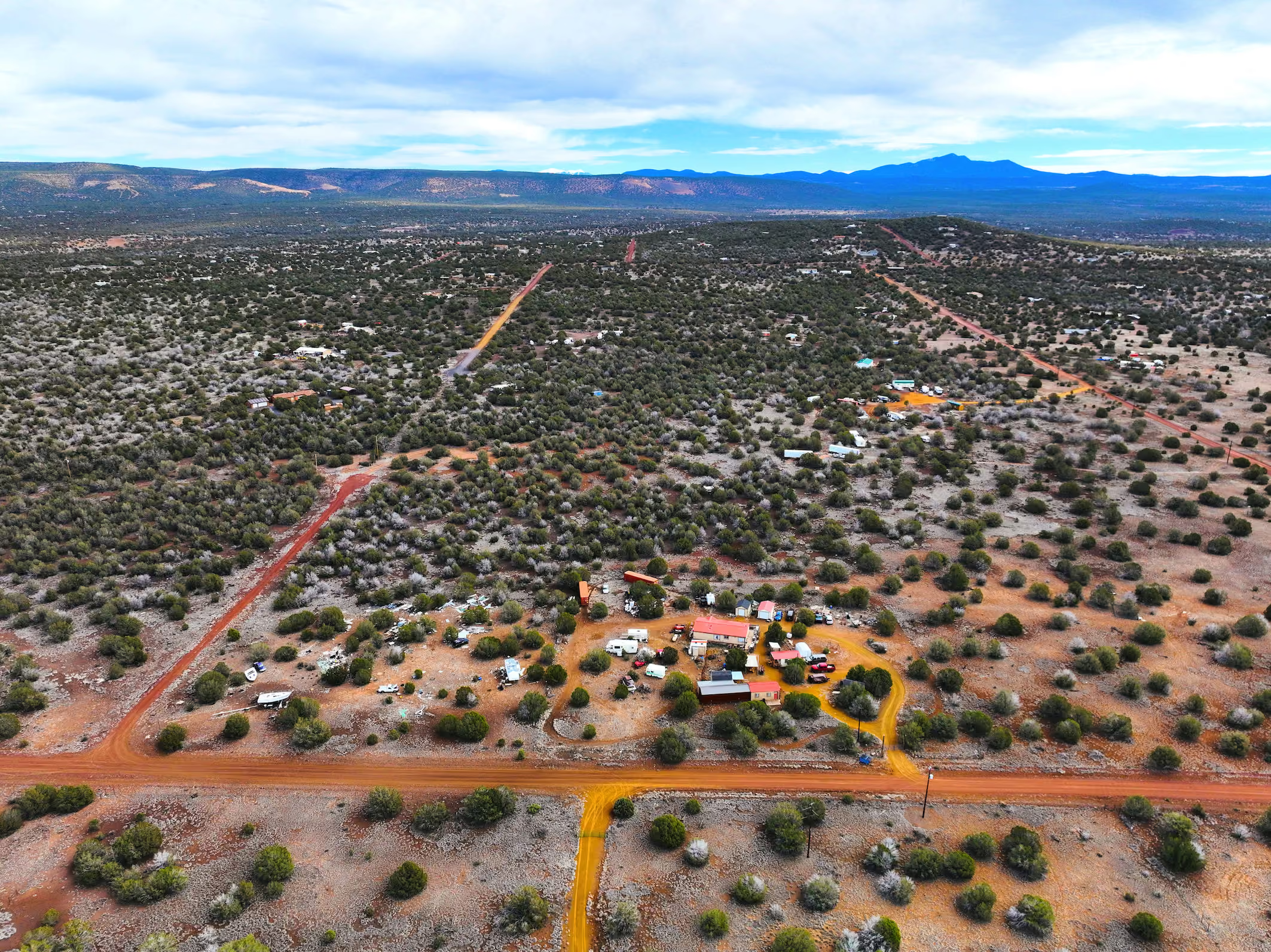
What Does Vacant Land Insurance Actually Cover?
Vacant land insurance is a liability product, not a property product. It does not protect the dirt, the trees, or any fencing. It protects your wallet if someone files a claim against you.
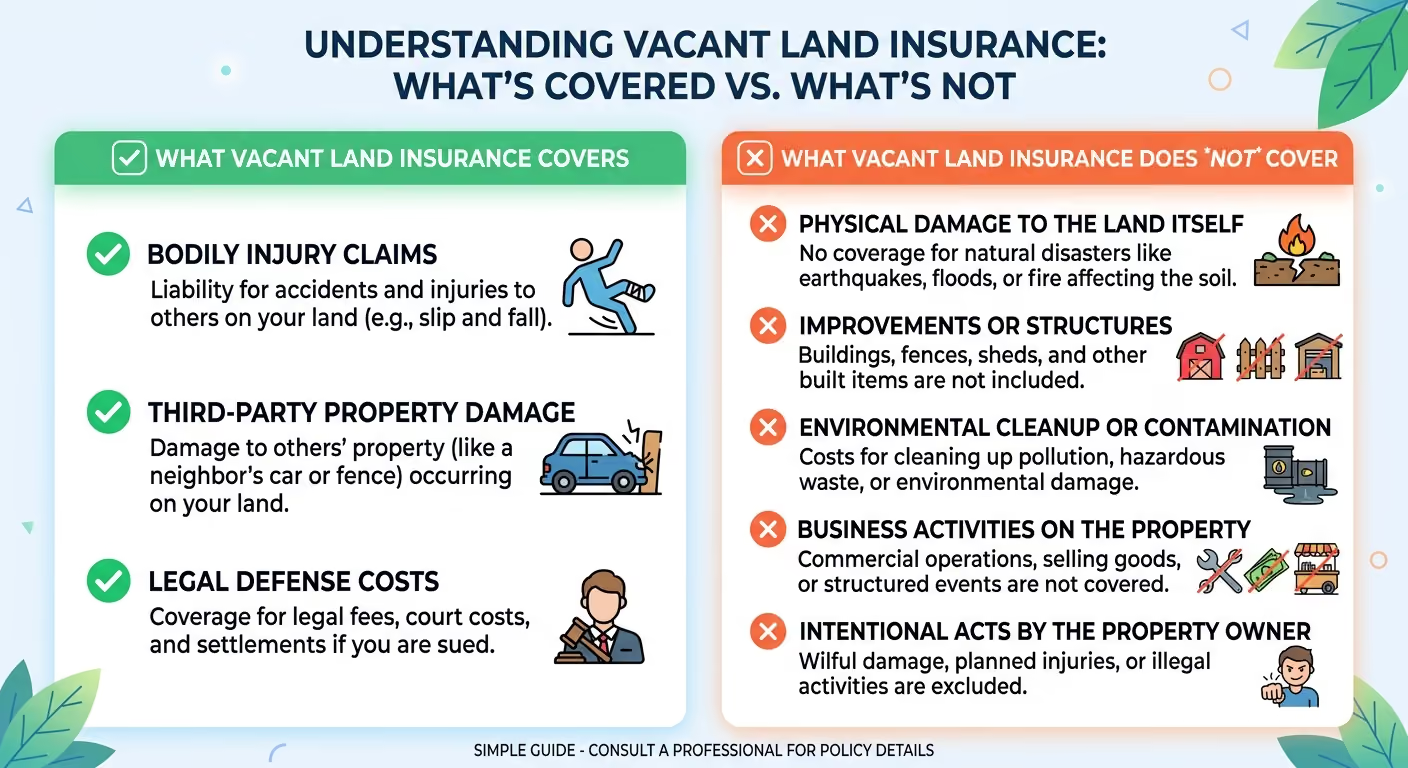
Here is what a standard vacant land liability policy covers:
Bodily injury claims. Someone hikes across your property, steps in a hole, and breaks their ankle. They hire a lawyer. Your policy covers the legal defense costs, any medical bills you're ordered to pay, and any settlement up to your coverage limit.
Third-party property damage. If your land contributes to damage on a neighbor's property, such as a fallen tree or a collapsed fence, liability coverage can apply depending on your policy terms.
Legal defense costs. Even if a lawsuit is frivolous, defending yourself in court costs money. A standard vacant land policy covers attorney fees and court costs, even if the case is dismissed.
Here is what vacant land insurance does NOT cover:
- Physical damage to the land itself
- Improvements or structures (a barn, a fence, a shed)
- Environmental cleanup or contamination
- Business activities conducted on the property
- Intentional acts by the property owner
If you have a structure on the land, even an abandoned one, you may need a separate vacant property policy to cover that building. Check who owns a property and what's on it before you buy to understand what you're taking on.
Do You Legally Need Insurance on Vacant Land?
No federal law requires vacant land owners to carry insurance. Most states have no blanket requirement either.
But there are three common situations where you will need it regardless.
Your lender requires it. If you financed the land, your lender almost certainly included an insurance requirement in the loan agreement. They want to know that a lawsuit won't wipe out your ability to make payments. Check your loan documents if you're unsure.
You lease it or allow access. If you've given a hunting club access, allowed a neighbor to run cattle, or entered any kind of lease agreement, the other party will likely require proof of insurance before they sign anything. No serious hunter or farmer will use your land without it.
Local ordinances. It's uncommon, but some counties have requirements tied to specific land uses, particularly if the property is near a subdivision or is part of a planned development area.
Outside of those situations, insurance is optional. That doesn't mean it's unnecessary. It means the decision is yours.
How Much Does Vacant Land Insurance Cost?
Vacant land insurance is one of the more affordable types of liability coverage you can buy.
A basic policy typically runs $150 to $500 per year for most rural parcels. For very small lots with low liability exposure, coverage can start around $12 per month, which works out to about $144 per year for $1 million per-occurrence coverage.
Some insurers price by acreage. A common formula is roughly $0.35 per acre with a $265 minimum. Under that model, a 10-acre parcel costs about $265. A 200-acre parcel might cost around $335 per year.
Factors that push the price up:
- Proximity to populated areas or roads
- Recreational use (hunting, ATVs, hiking)
- States with higher litigation rates like California and Florida
- Higher coverage limits ($2 million aggregate vs. $1 million)
- Known hazards on the property (old structures, water bodies, steep terrain)
Factors that keep the price down:
- Remote rural location with limited access
- Passive investment only (no activity on the land)
- Interior states with lower lawsuit frequency
- Small acreage
Property TypeTypical Annual CostSmall rural lot, remote location, passive hold$144–$200Mid-size rural parcel, limited road access$200–$300Larger acreage with recreational use$300–$500High-traffic areas or known hazards$400–$700+
Understanding all the costs of owning land → https://www.compasslandusa.com/faq/]

Am I Liable If Someone Gets Hurt on My Vacant Land?
This is the part most new landowners don't expect: yes, you can be held liable even if you didn't invite anyone onto your property.
Most states impose some duty of care on landowners toward anyone who enters the property, including trespassers. The level of duty varies by state and circumstance, but the general rule is that if you know people regularly access your property and you have a known hazard, you have some obligation to address it.
"When people think about land liability, they usually picture invited guests. But some of our buyers are surprised to learn that someone crossing their property without permission can still file a lawsuit against them. It doesn't happen constantly, but it happens, and the bills can be serious."— Andrew, Co-founder of Compass Land USA
The average bodily injury claim across property types runs between $26,000 and $35,000. Legal defense costs alone, even for cases that get dismissed, can reach that level before the matter is resolved.
One specific concern for landowners with families nearby: the attractive nuisance doctrine. Most states apply this rule to children. If a child wanders onto your property and is injured by something that a child would naturally be drawn to, like an old foundation, a pond, or an abandoned vehicle, you may be liable even if the child was trespassing. The doctrine assumes that children cannot fully understand the risks.
This is one reason Andrew and Felicia, who have managed owner-financed land sales across Arizona, Colorado, Florida, Nevada, and New Mexico since 2017, recommend that buyers think about liability before they think about what to build.
When You Should Carry Vacant Land Insurance
Some situations make vacant land insurance close to essential. Here are the clearest ones.
Your lender is involved. If you used owner financing or a traditional loan to buy the property, check your agreement. Most lenders require liability coverage.
You allow others to use the land. Hunting leases, grazing agreements, camping access, and ATV trails all create liability exposure. The more people who access the property, the more risk you carry.
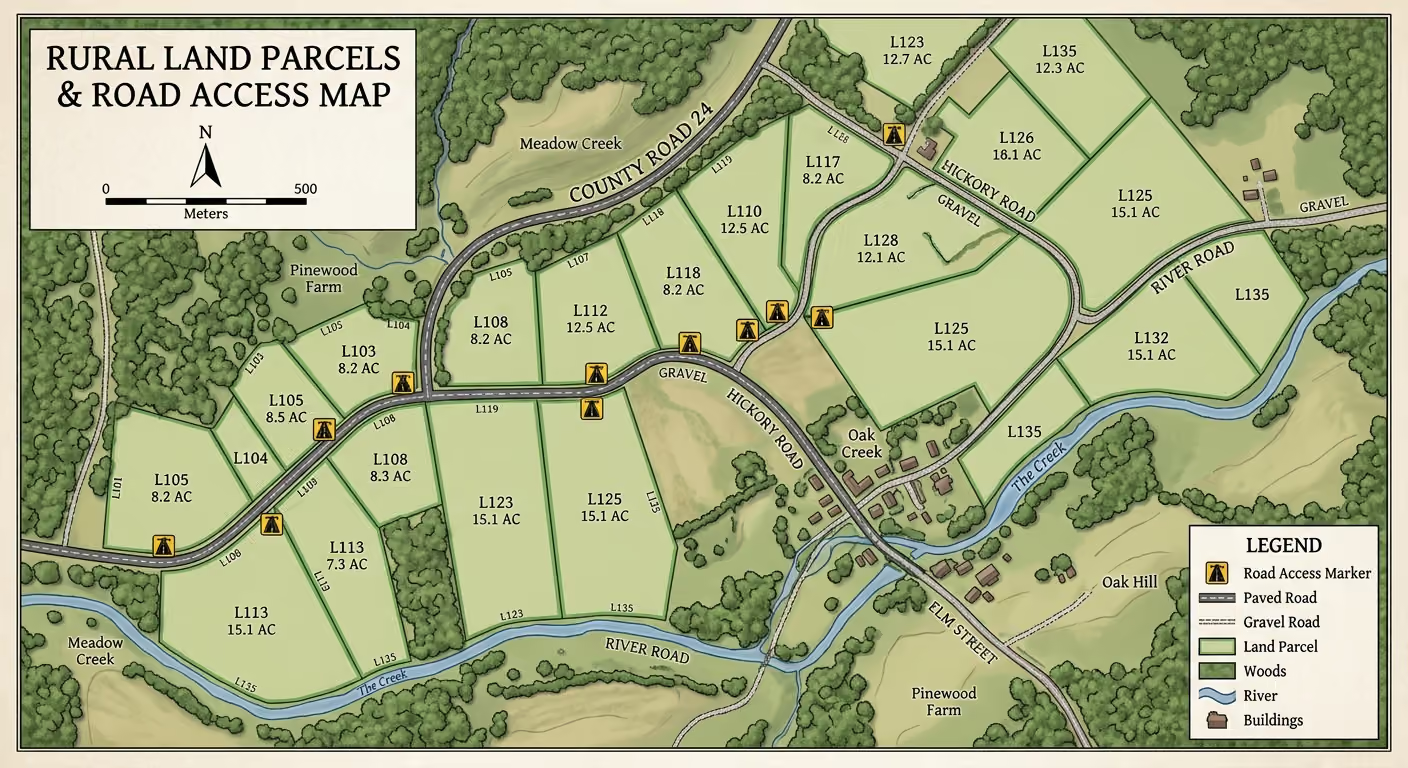
The land is near a road or neighborhood. Properties close to roads, trails, or residential areas see more foot traffic. More foot traffic means more chances for someone to get hurt.
You have any structures or hazards. An old well, a collapsed outbuilding, a drainage ditch, a body of water. These are all magnets for claims. If you checked the property for existing structures and hazards → https://www.compasslandusa.com/check-property-slope-elevation/ before buying, you already know what's there.
You plan to hold the land for several years. The longer you own it, the longer the liability window stays open. A $200 annual premium is a small cost to keep that window covered.
"We always tell buyers to think of vacant land insurance the way they think of a spare tire. You don't expect to need it. But if you do need it and you don't have it, the cost is real. A $200 policy against a $30,000 claim is math that doesn't take long to work out."— Felicia, Co-founder of Compass Land USA
When You Can Skip Vacant Land Insurance
Not every parcel needs a policy. Here are the situations where skipping it is a reasonable call.
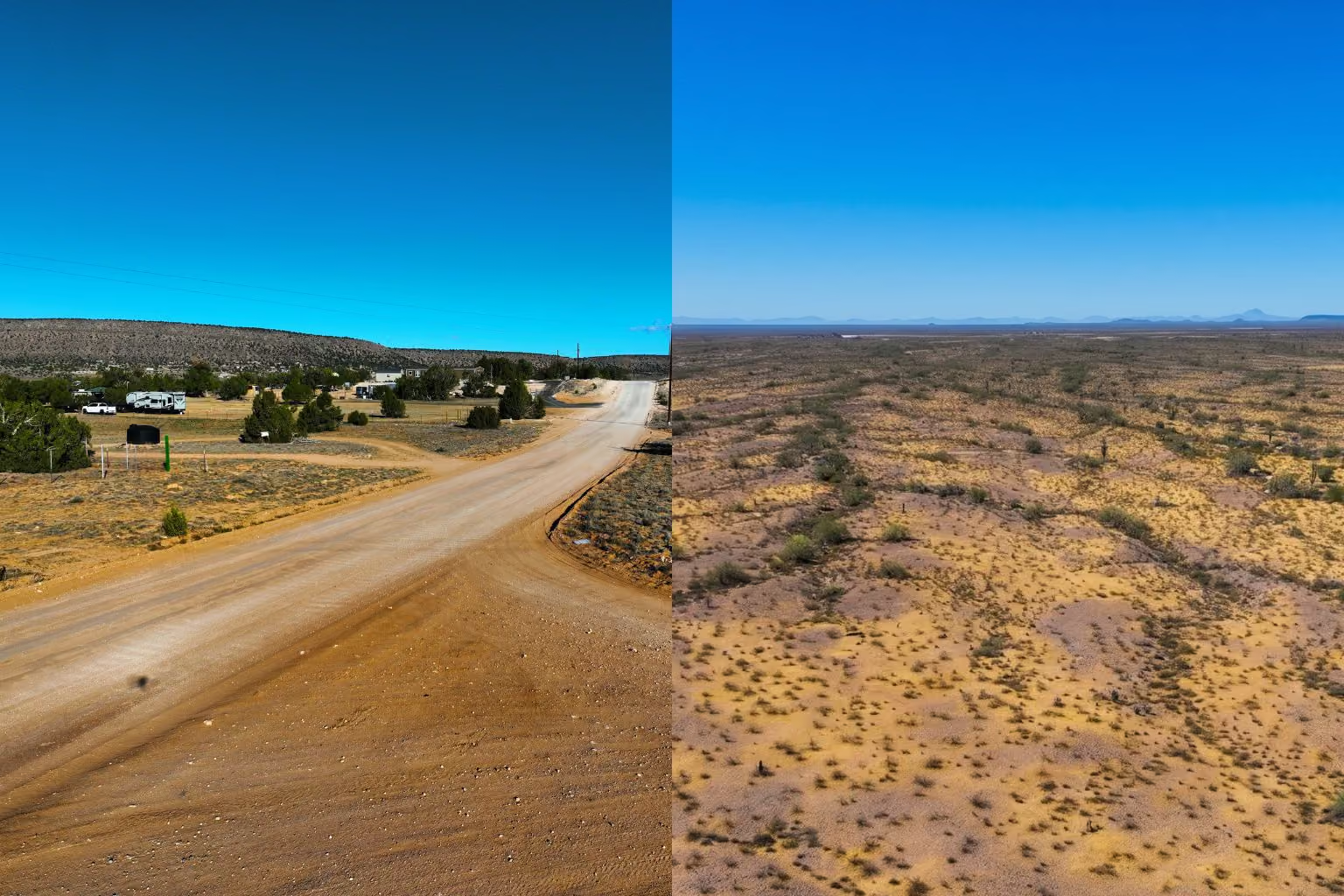
The land is genuinely remote. If your parcel is miles from any town, has no road frontage, is difficult to reach on foot, and has no recreational draw, the realistic probability of someone wandering onto it and getting hurt is very low. Felicia notes that some of the most remote properties in Arizona and Nevada that Compass Land USA has sold fall into this category.
You're holding it for a short window. If you bought at auction and plan to resell within three to six months, the cost-benefit math may favor skipping the policy. Weigh the annual premium against the realistic exposure during that window.
You already have umbrella coverage that explicitly includes the land. Some personal umbrella insurance policies extend to vacant land owned by the policyholder. Call your insurer and ask directly. If the land is covered, you don't need a separate policy. Get the confirmation in writing.
The lot is very low value. On a $2,000 lot, paying $200 a year for insurance represents 10% of the asset value annually. Some investors run the numbers and decide the math doesn't work, especially for remote parcels with no realistic liability exposure.
One thing to note: "I didn't know they were there" is not a legal defense. The decision to skip insurance should be based on a genuine assessment of the land's risk profile, not on the assumption that no one will ever file a claim.
How to Get a Vacant Land Insurance Quote
Getting a quote takes about 15 minutes. Most specialty insurers can bind coverage the same day.
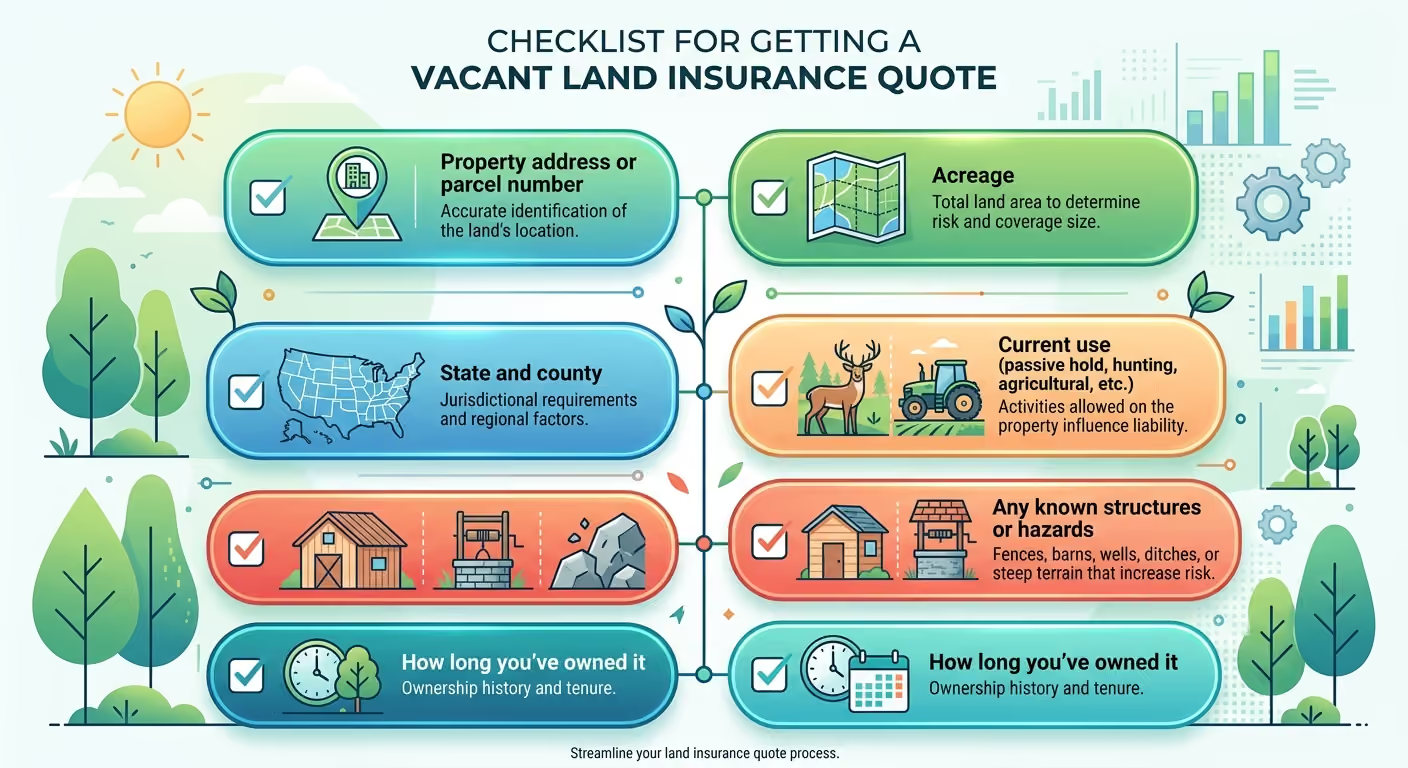
Before you call, have this information ready:
- Property address or parcel number
- Acreage
- State and county
- Current use (passive hold, hunting, agricultural, etc.)
- Any known structures or hazards
- How long you've owned it
Look for insurers that specialize in vacant land or rural property. National Real Estate Insurance Group (NREIG) is one of the best-known options for landlords and land investors. Specialty agricultural insurers and regional independent brokers often have the most competitive rates for rural parcels.
Check for utilities and access before getting a quote since insurers will ask about both.
If you bought land in Arizona, Florida, Colorado, or Nevada, each state has its own litigation environment. Florida and California tend to produce higher premiums for the same coverage level.
What About Your Existing Homeowners Policy?
A standard homeowners insurance policy does not cover vacant land you own separately from your home. Your policy is tied to a specific structure and the land it sits on.
Some people assume their homeowners coverage extends to other parcels they own. It typically does not.
According to Felicia, who handles property operations at Compass Land USA, "This is one of the most common misunderstandings we hear from new land buyers. They think because they have homeowners insurance, they're covered. But a vacant parcel in another county, or another state, is an entirely separate liability exposure."
A personal umbrella policy is the exception. These policies can extend coverage beyond your primary property, but only if vacant land is explicitly included in the policy language. Ask your insurer.
Frequently Asked Questions
Do I need insurance on vacant land?
You are not legally required to carry insurance on most vacant land in the United States. However, if you financed the land, your lender may require a liability policy. If you allow others to use the property for hunting, recreation, or agriculture, those parties will typically require proof of insurance as well. Even where it's optional, many landowners choose to carry it because liability exposure on vacant land is real, even for trespassers.
How much does vacant land insurance cost?
Most vacant land liability policies run $150 to $500 per year for standard rural parcels. Some insurers offer basic coverage starting around $12 per month, which provides $1 million in per-occurrence liability coverage. Pricing depends on acreage, location, land use, and the coverage limits you choose. Remote parcels with no structures and no recreational use typically fall at the lower end of that range.
What does vacant land insurance cover?
Vacant land liability insurance covers bodily injury claims, legal defense costs, and third-party property damage claims that arise from your ownership of the land. It does not cover the land itself, any structures on the property, environmental cleanup, or business operations. Think of it as protection against someone getting hurt and holding you financially responsible.
Am I liable if someone gets hurt on my vacant land without permission?
In most states, yes. Landowners owe some duty of care to trespassers, especially when known hazards exist. The attractive nuisance doctrine in most states also holds landowners liable for injuries to children, even trespassing children, if the child was drawn to something on the property that a child would naturally find interesting. The average bodily injury claim runs between $26,000 and $35,000, not counting legal fees.
When can I skip vacant land insurance?
Skipping a policy makes the most sense when the land is truly remote with minimal public access, when you plan to resell the property within a few months, or when you already have a personal umbrella policy that explicitly covers vacant land. On low-value lots in hard-to-access locations, some investors decide the annual premium doesn't justify the risk level. Run the numbers for your specific parcel.
Does homeowners insurance cover vacant land?
A standard homeowners policy does not cover separate vacant land parcels you own. Your homeowners coverage is tied to your primary residence and the land it sits on. Some umbrella policies extend to other owned properties, but you need to confirm this directly with your insurer and get it in writing.
How do I get a vacant land insurance quote?
Contact specialty insurers like NREIG (National Real Estate Insurance Group) or work with an independent broker who handles rural and agricultural properties. Have your parcel number, acreage, state, county, and current land use ready before you call. Most insurers can provide a quote and bind coverage the same day.
Does vacant land insurance cost more in some states?
Yes. States with higher litigation rates, particularly Florida and California, typically produce higher premiums for the same coverage limits compared to rural interior states. Your land use also matters significantly. A parcel used for hunting or ATV riding will cost more to insure than the same parcel held passively as an investment.
The Bottom Line
Vacant land insurance is not complicated. It's a liability policy that costs a few hundred dollars a year and pays for legal defense and settlement costs if someone gets hurt on your property.
For most landowners, especially those who have financed the land, who allow any kind of access, or who hold land near populated areas, the math is simple. A couple hundred dollars a year is cheap protection against a five-figure claim.
For truly remote parcels with no realistic liability exposure, skipping it is a reasonable call.
The fact that you're asking this question at all means you're thinking about land ownership the right way. Most buyers focus entirely on purchase price and forget about the ongoing responsibilities of owning land.
If you have questions about any aspect of vacant land ownership, including whether a specific property makes sense for your situation, call or text Andrew anytime at (313) 349-0434. You can also browse current properties at compasslandusa.com.
Andrew
Co-founder, Compass Land USA
Andrew co-founded Compass Land USA after buying and selling land for years without needing a single bank. He's been on both sides of hundreds of owner-financed deals across five states.
You've Read Enough. Time to Own Something.
Ready to Stop Renting Your Life and Start Owning Something?
Browse available land in Arizona, Colorado, Florida, Nevada, and North Carolina. Owner financing on every parcel. No bank. No credit check. Close in days.
.jpg)