


Protect Yourself
Before You Buy
How to Check for Property Back Taxes and Tax Liens for FREE
You could be buying a property with hundreds or thousands of dollars in back taxes. As the new owner, you'd be responsible. Here's how to check for free before you buy.

How to Check for Property Back Taxes and Tax Liens for FREE
You found a piece of land you want to buy. The price looks good, the location works, and you can picture yourself out there. But before you hand over any money, you need to check one thing that trips up more buyers than almost anything else: unpaid property taxes.
Checking for back taxes and tax liens is one of the most important steps on your land-buying checklist. The good news is you can do it for free, online or with a quick phone call. It takes about 15 minutes and could save you from inheriting someone else's debt.
A property tax lien is a legal claim placed on real estate when the owner fails to pay property taxes owed to the county or local government. According to the National Tax Lien Association, more than $14 billion in property taxes goes unpaid across the United States each year, and approximately 2,000 counties hold tax lien certificate sales to recover that money. If you buy land with an existing tax lien, you become responsible for paying off that debt as the new owner.
This guide walks you through exactly how to check for back taxes and liens using free county websites, what the results mean, and what to do if you find unpaid taxes on a property you want to buy.
Who Is Responsible for Back Property Taxes?
This is one of the most important questions to ask when buying land. When property taxes go unpaid, that debt does not disappear when the property changes hands. As the new owner, you would be responsible for any outstanding taxes and liens attached to the property.
That means you could buy a piece of land for $5,000 and then find out there is $2,000 in unpaid back taxes on top of it. Those back taxes are now your problem.
According to a 2025 report from Cotality (formerly CoreLogic), the national property tax delinquency rate reached 5.1% in 2025, up from 4.5% in 2024. Property taxes across the country have risen 27% since 2019, which means more properties than ever have unpaid balances.
The states with the highest delinquency rates include Mississippi at 13.8%, New Jersey at 9.9%, and New Mexico at 9.4%. If you are buying land in any of those states, checking for back taxes is especially important.
"We check taxes on every single property before we buy it. It's the first thing we look at after confirming ownership. You would be surprised how many properties out there have years of unpaid taxes sitting on them."— Andrew, Co-founder of Compass Land USA
If you want to make sure you buy your next property debt-free, you need to check the taxes and tax liens before you close. Here is how to do that without spending a dime.
What Is a Tax Lien and How Does It Affect Property Ownership?
A tax lien is the government's legal claim against your property when you do not pay your property taxes. Every county in the United States has the right to place a lien on real estate with delinquent taxes.
Tax liens are different from other types of liens because they take priority over almost everything else. A property tax lien sits ahead of mortgage liens, judgment liens, and most other claims. That means if a property goes to a tax sale, the tax lien gets paid first, and the mortgage lender could lose their entire investment.
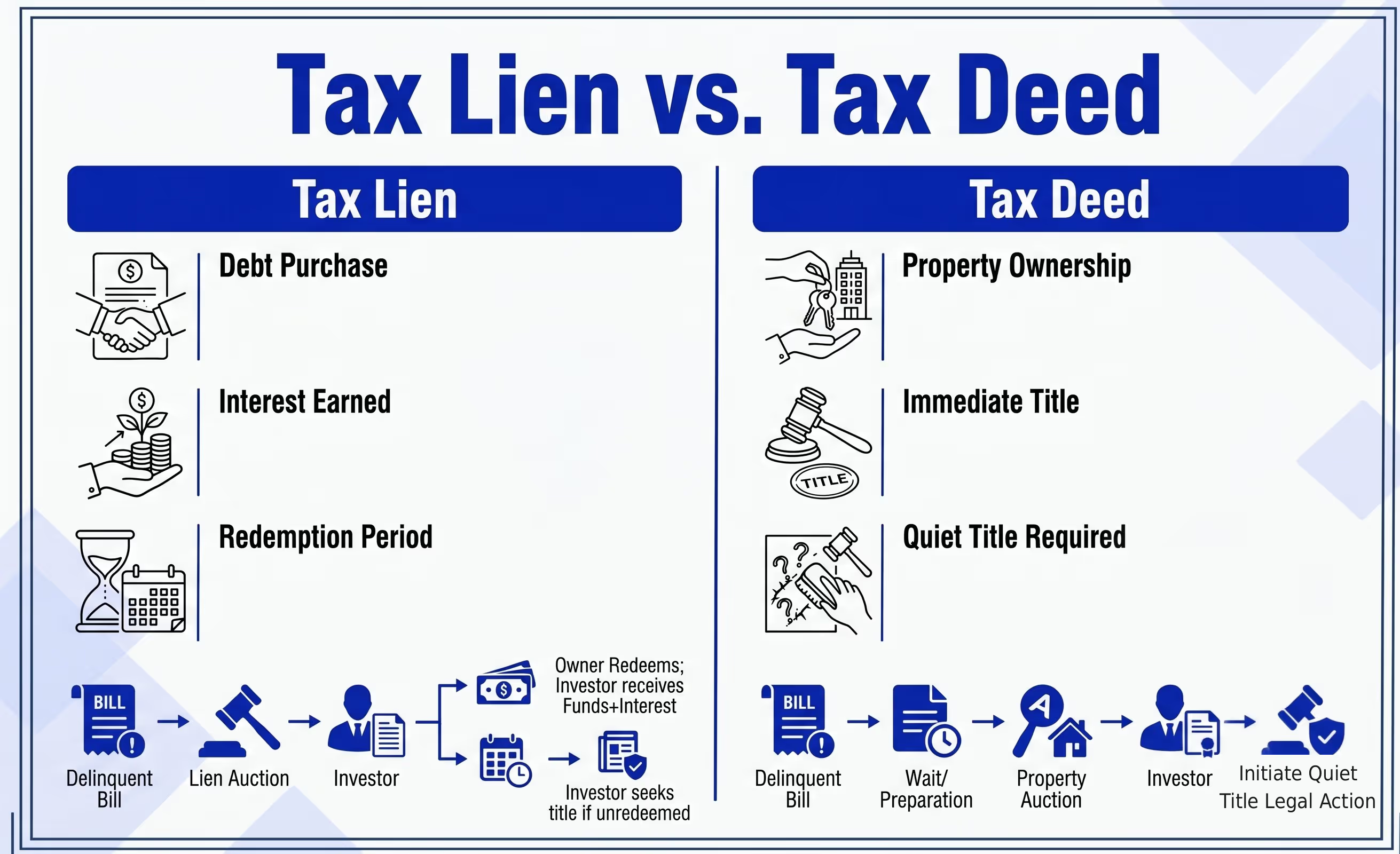
There are two systems counties use to collect unpaid taxes, and the system that applies depends on your state:
Tax lien states sell the tax debt to investors through tax lien certificates. The investor pays the overdue taxes and earns interest when the property owner pays them back. If the owner never pays, the investor can eventually foreclose. According to Cotality, tax lien states have a higher average delinquency rate of 6.2% compared to 4.9% in tax deed states.
Tax deed states sell the actual property at auction after the owner fails to pay taxes for a certain period. The buyer at a tax deed sale gets ownership of the property.
"Rising home values often lead to higher property taxes, and over the past six years, this has become a reality for many homeowners. Those without sufficient financial buffers may find themselves struggling to keep up with growing tax bills."— Molly Boesel, Senior Principal Economist at Cotality
For land buyers, the takeaway is simple: always check for tax liens before you buy. If there is a lien on the property, you need to know about it before closing.
<
What You Need Before You Start Your Tax Search
You need two pieces of information to check the property taxes on any piece of land:
The county name. Every property in the United States sits inside a specific county, and that county's treasurer or tax collector handles all property tax records.
The parcel number. This is also called the APN (Assessor's Parcel Number), tax ID, or parcel ID depending on the county. It is the unique number the county uses to identify that specific piece of land.
If you found a property listed for sale on any of the land listing sites, Craigslist, or Facebook Marketplace, you can usually find the parcel number right in the listing. If it is not listed, ask the seller and they should be able to provide it.
Important: If the seller does not have the parcel number or will not give it to you, that is a red flag. It could mean the seller does not actually own the property or does not have the right to sell it. Walk away from any deal where the seller cannot provide basic property identification.
According to Felicia, co-founder of Compass Land USA, who has managed due diligence on hundreds of land transactions: "The parcel number is your key to everything. Once you have it, you can look up the taxes, the owner, the zoning, the assessed value, all of it. Every county in the country tracks properties by parcel number."
How to Check Back Property Taxes Online (for FREE)
The fastest way to check for back taxes is through the county treasurer's website. Most counties have free online search tools where you can look up any property by parcel number or address.
Here is the step-by-step process:
Step 1: Find the county treasurer's website. Go to Google and search for "[County Name] treasurer property tax search" or "[County Name] tax collector parcel search." Look for the official government website, which usually ends in .gov or .us.
Step 2: Find the online property search tool. Look for links on the treasurer's page that say "Online Property Search," "Tax Parcel Lookup," "Property Tax Records," or "Treasurer Parcel Search." Every county's website looks different, but most have a search tool somewhere on the treasurer or tax collector page.
Step 3: Enter the parcel number. Type in the APN or parcel number and click search. Some counties also let you search by property address or owner name.
Step 4: Read the tax history. The results will show you the property's tax history, including any unpaid balances, penalties, interest, and the current tax status. Look for words like "delinquent," "unpaid," "owing," or "past due."
Real Example: Costilla County, Colorado
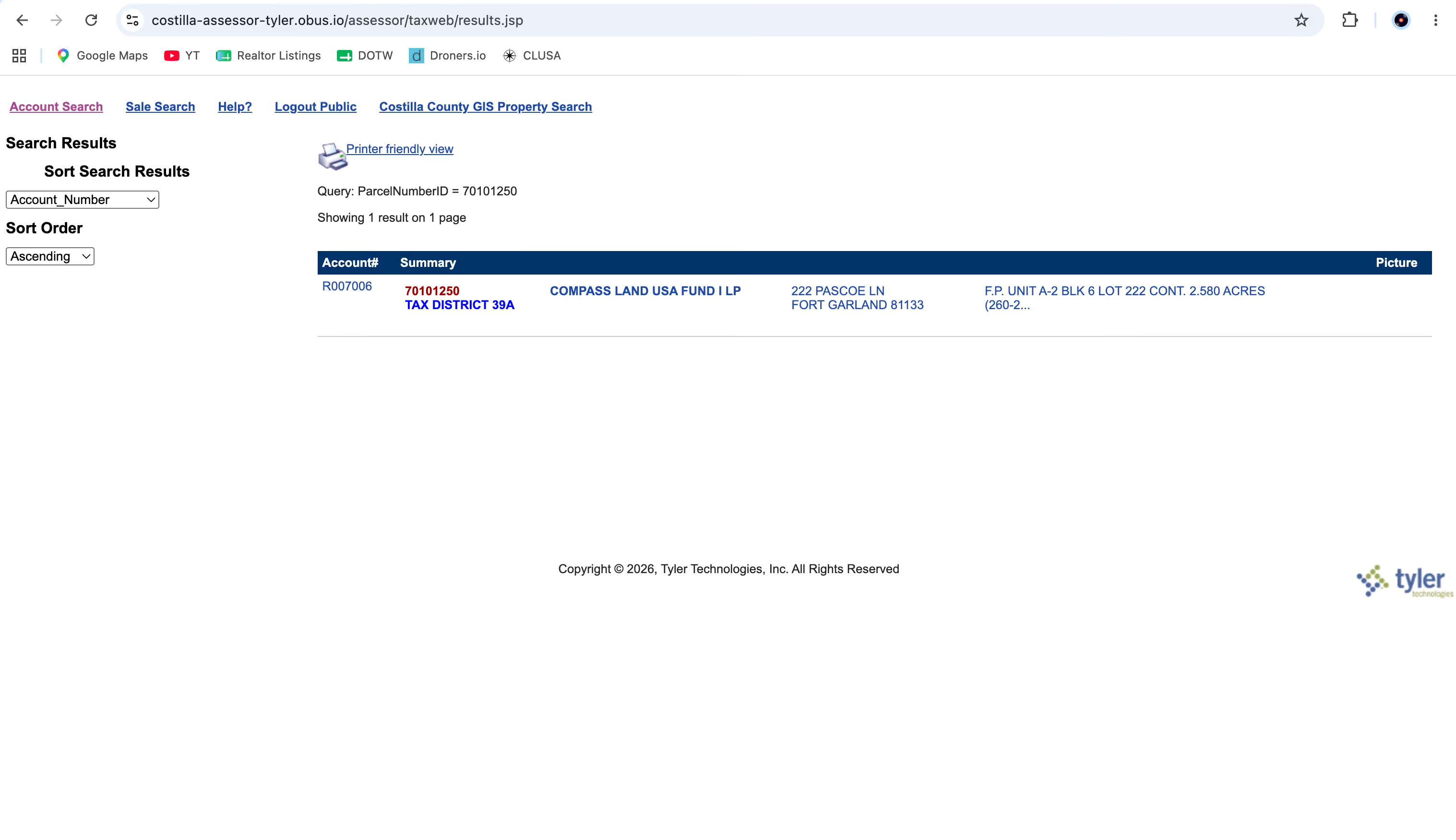
Let me walk you through a real search using Costilla County, Colorado as an example. Our example property has parcel number 70273760.
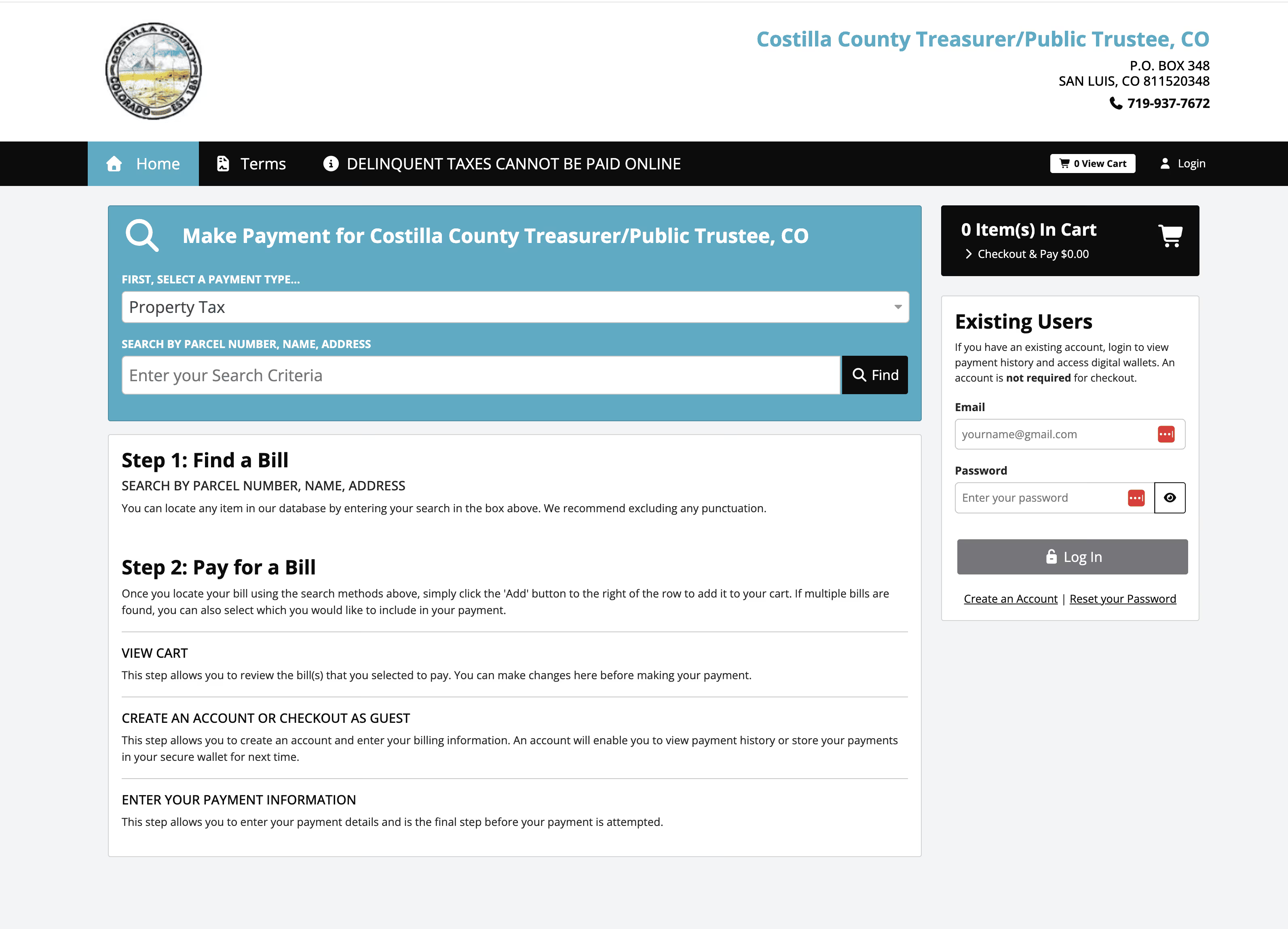
I searched Google for "Costilla County treasurer parcel search" and found the county treasurer's page. I clicked the link that says "Click Here for Online Property Search," accepted the county's disclaimer, and entered the parcel number.
The results showed the property owner, assessment history, tax history, and land details. Costilla County's database is especially useful because you can also see previous transactions, including when the property last sold and how much was paid for it.
After clicking "View Property Tax History," I could see that the property was current on all taxes. No delinquent balances, no liens, no issues.
Not every county has a database as detailed as Costilla County's, but most counties across the country offer at least a basic online tax lookup. According to parcel-viewer.us, a directory of county GIS and property records portals, the majority of U.S. counties now provide free online access to property tax information without requiring a login or account.
How to Check Property Taxes by Phone
If the county you are researching does not have an online property tax database, or if the online information seems outdated, you can call the county treasurer's office directly. Give them the parcel number and they will look up any back taxes and tax liens for you over the phone.
"Even when we find the information online, we still call the county to double-check. The online databases are not always current, and sometimes there are pending transactions or recent payments that have not posted yet. A quick phone call takes five minutes and gives you the most accurate picture."— Andrew, Co-founder of Compass Land USA
Here is what to ask when you call:
Are there any delinquent taxes on this parcel? Ask about all years, not just the most recent. Some properties have multiple years of unpaid taxes.
Are there any tax liens or tax certificates sold on this property? This tells you whether an investor has already purchased the tax debt.
What is the total amount needed to bring the property current? Get the full number including penalties and interest.
When is the next tax payment due, and how much is it? This helps you budget for your first tax payment as the new owner.
You can find the treasurer's phone number on the county website. For Costilla County, it is (719) 937-7672. Every county has a treasurer's office, and they are generally helpful when you call with a parcel number.
Other Free Tools for Checking Property Tax Records
Beyond the county treasurer's website, several other free resources can help you research property tax information:
County GIS (Geographic Information System) portals. Many counties offer free GIS map viewers where you can click on a parcel and see tax and assessment data. Search for "[County Name] GIS map" or "[County Name] parcel viewer." These tools often show property boundaries, owner information, and assessed values alongside tax data.
County assessor websites. The assessor handles property valuations, which directly affect tax amounts. Searching the assessor's database tells you the assessed value, which helps you estimate annual taxes even if the treasurer's records are not online.
State-level property tax resources. Some states maintain statewide property tax databases. For example, Colorado's Division of Property Taxation provides resources linking to all 64 county assessor and treasurer offices.
Felicia recommends starting with the treasurer's website for tax status, then checking the assessor's site for the assessed value: "The treasurer tells you what is owed. The assessor tells you what the property is worth in the county's eyes. You want both numbers before you buy, because the assessed value is what your future tax bills are based on."
If you are buying land in one of the states where Compass Land USA operates (Arizona, Colorado, Florida, Nevada, or New Mexico), you can check our state-specific buying guides for direct links to county resources:
"buying land in Arizona" → https://compasslandusa.com/post/how-to-buy-arizona-land-7-things-to-watch-out-for
"buying land in Colorado" →https://compasslandusa.com/post/how-to-buy-colorado-land-8-things-to-watch-out-for
"buying land in Florida" → https://compasslandusa.com/post/how-to-buy-florida-land-9-things-to-watch-out-for
"buying land in Nevada" → /buying-land-in-nevada/]
"buying land in New Mexico" →https://compasslandusa.com/post/how-to-buy-new-mexico-land-8-things-to-watch-out-for
What Happens If You Find Unpaid Taxes on a Property
If your search reveals that the property you want to buy has back taxes owed, you have a few options.
Option 1: Negotiate the price down. If the back taxes are manageable, you can ask the seller to reduce the sale price by the amount of unpaid taxes, or require them to pay the taxes before closing.
Option 2: Pay the taxes yourself. If the property is still worth buying with the added cost, you can pay the outstanding taxes directly to the county treasurer's office. Some counties let you pay online with a debit or credit card (expect a processing fee), while others accept payment by phone or mail.
Option 3: Walk away. If the back taxes are substantial or there are multiple tax liens stacked up, it may not be worth the risk. Properties with years of unpaid taxes can also have other issues that are not immediately visible.
How long before a property goes to tax sale? The timeline varies by state, but generally a property must have one to three years of delinquent taxes before it can be sold at a tax sale. In Arizona, the redemption period is three years. In Florida, property owners get at least two years. Some states, like Nevada and New Mexico, have no redemption period after a tax deed sale, meaning the original owner loses all rights immediately.
The key point is that unpaid property taxes do not just sit there forever. Eventually, the county will sell the property to recover what is owed. If you are buying from someone who has not paid their taxes, you want to know exactly where that property stands in the delinquency timeline.
For more on what to look for during the buying process, check out our complete guide on 15 questions to ask before buying any piece of land.
"15 questions to ask before buying any piece of land" → https://compasslandusa.com/post/questions-ask-buying-land
Why Checking Taxes Is Part of Your Due Diligence Checklist
Checking for back taxes and liens is just one step in the due diligence process every land buyer should follow before closing on a property. It sits alongside checking who owns the property, verifying the zoning, confirming road access, and looking into utilities.
At Compass Land USA, we handle all of this research on every property before we list it for sale. We check the taxes, confirm ownership, verify zoning and access, and disclose everything upfront so buyers know exactly what they are getting.
If you are doing your own due diligence on a property you found elsewhere, here is the full series of free guides that walk you through each step:
"check who owns the property" → https://compasslandusa.com/post/check-who-owns-property
"verifying the zoning" → https://compasslandusa.com/post/check-property-zoning
"confirming road access" → /check-property-access/
"looking into utilities" →https://compasslandusa.com/post/check-property-utilities
"how to check slope and elevation" → https://compasslandusa.com/post/check-property-slope-elevation
"how to check well depth in your area" →https://compasslandusa.com/post/check-your-property-well-depth
"how to check for sinkholes in Florida" → https://compasslandusa.com/post/how-to-quickly-find-sinkholes-in-florida
By the end of this series, you will have a comprehensive checklist of everything you need to verify before you buy any piece of land.
Frequently Asked Questions
How can I check if a property has back taxes or tax liens for free?
You can check for free by visiting the county treasurer's website and searching by parcel number or property address. Most counties in the United States offer free online property tax lookup tools. If the county does not have an online search, call the treasurer's office directly with the parcel number and they will look it up for you at no charge.
What are tax liens and how do they affect property ownership?
A tax lien is a legal claim the government places on a property when the owner does not pay their property taxes. Tax liens take priority over all other liens, including mortgages. If you buy a property with an existing tax lien, you become responsible for paying that debt. In tax lien states, the debt may have been sold to a private investor who earns interest on the unpaid amount.
Where can I find delinquent property tax records online?
The best place to find delinquent property tax records is the county treasurer's or tax collector's website for the county where the property is located. Search Google for "[County Name] treasurer property tax search" to find the official portal. You can also check the county assessor's website for assessed values and the county GIS portal for mapped property data.
What is the difference between a tax lien and a tax deed?
In a tax lien sale, the county sells the unpaid tax debt to an investor. The property owner keeps the land but must repay the investor with interest. In a tax deed sale, the county sells the actual property to the highest bidder, and the original owner loses ownership. About 30 states use tax lien sales, while the rest use tax deed sales or a hybrid system.
How much back taxes can a property have before it goes to a tax sale?
The timeline varies by state. Most states require one to three years of delinquent taxes before a tax sale can happen. Arizona allows a three-year redemption period. Florida gives property owners at least two years. States like Nevada and New Mexico have no redemption period after a tax deed sale. Always check your specific state's rules, as they vary significantly.
Can I buy a property that has back taxes and just pay them off?
Yes. If the back taxes are a manageable amount and the property is still worth buying, you can pay the outstanding balance directly to the county treasurer. Some counties accept online or phone payments. You can also negotiate with the seller to reduce the sale price by the amount of unpaid taxes or require them to clear the taxes before closing.
Do I need a title company to check for tax liens?
A title company runs a formal title search that checks for all liens, including tax liens, judgment liens, and mortgage liens. While you can do a basic tax check yourself for free using the county treasurer's website, a title company provides the most thorough and legally reliable search. At Compass Land USA, we close every transaction through a title company to protect both the buyer and us.
"title company" → https://compasslandusa.com/post/how-to-buy-owner-financed-land-title-company
What happens if I buy land without checking for back taxes?
If you buy land without checking and there are unpaid property taxes, you become responsible for that debt as the new owner. The county can place additional penalties and interest on the overdue amount, and if the taxes remain unpaid, the property could eventually be sold at a tax sale. Checking taxes before closing is one of the simplest ways to protect yourself.
Check the Taxes Before You Buy
Now you know how to check for back taxes and tax liens on any piece of land, completely for free. It takes about 15 minutes with a computer or a quick phone call, and it is one of the most important things you can do before buying property.
The fact that you are researching this puts you ahead of most buyers. Many people skip this step entirely and end up with unexpected bills after closing.
If you have questions about checking property taxes or want to see properties that have already been fully vetted, call or text Andrew anytime at (313) 349-0434. You can also browse our available properties at compasslandusa.com.
"browse our available properties" → https://compasslandusa.com/lands-for-sale
We have been helping people become landowners since 2017 across Arizona, Colorado, Florida, Nevada, and New Mexico. Every property we sell has been thoroughly checked for taxes, liens, zoning, and access before it ever hits our website.
*The information in this article is for educational purposes and should not be interpreted as legal advice. If you are considering buying land, we recommend working with a title company or real estate attorney to conduct a formal title search. Tax laws and procedures vary by state and county. A local professional can help you understand the specific rules that apply to the property you are interested in.
Andrew
Co-founder, Compass Land USA
Andrew co-founded Compass Land USA after buying and selling land for years without needing a single bank. He's been on both sides of hundreds of owner-financed deals across five states.
You've Read Enough. Time to Own Something.
Ready to Stop Renting Your Life and Start Owning Something?
Browse available land in Arizona, Colorado, Florida, Nevada, and North Carolina. Owner financing on every parcel. No bank. No credit check. Close in days.

.png)